Leicester researchers take pioneering albinism study out of hospital and into the community
Leicester researchers have taken specialist hospital-based research directly into the community, examining 120 people with albinism and their relatives in just three days as part of an ambitious European study.
Albinism is a group of inherited conditions in which the body makes little or no melanin pigment. As well as affecting hair and skin colour, it changes how the eye and its connections to the brain develop, and most people with the condition have reduced vision and nystagmus (involuntary oscillations of the eyes).
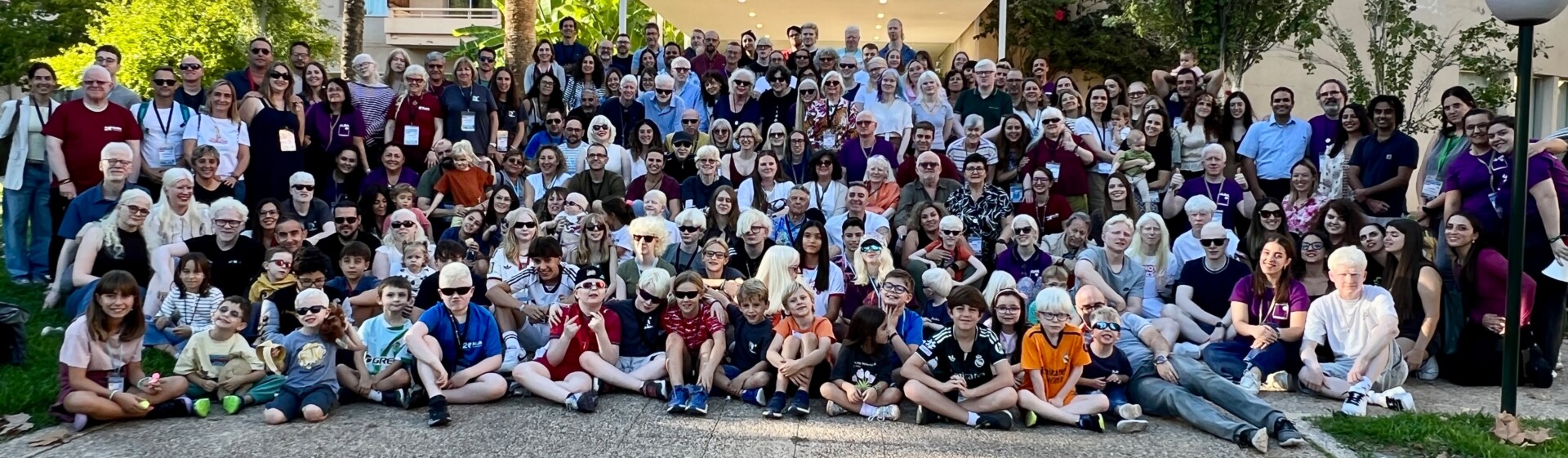
The team travelled to Alicante, Spain, where families from across Europe took part in a series of detailed tests designed to help researchers understand how different genetic changes linked to albinism affect a person’s eyes, vision, hair and skin pigmentation.
The study was led by Dr Mervyn Thomas of the University of Leicester’s Ulverscroft Eye Unit and Professor Lluís Montoliu of the Spanish National Centre for Biotechnology (CNB-CSIC) in Madrid, in partnership with the Spanish albinism charity ALBA.
It took place during the charity’s 20th anniversary event in October, after months of joint preparation by the Leicester team, Professor Montoliu and ALBA.
Bringing together such a large group of people with albinism allowed researchers to collect an unusually detailed set of measurements in a very short period of time.
Rather than asking families to attend hospital clinics, the researchers brought the study to them, creating six research stations at the charity event, each run by a member of the Leicester team.
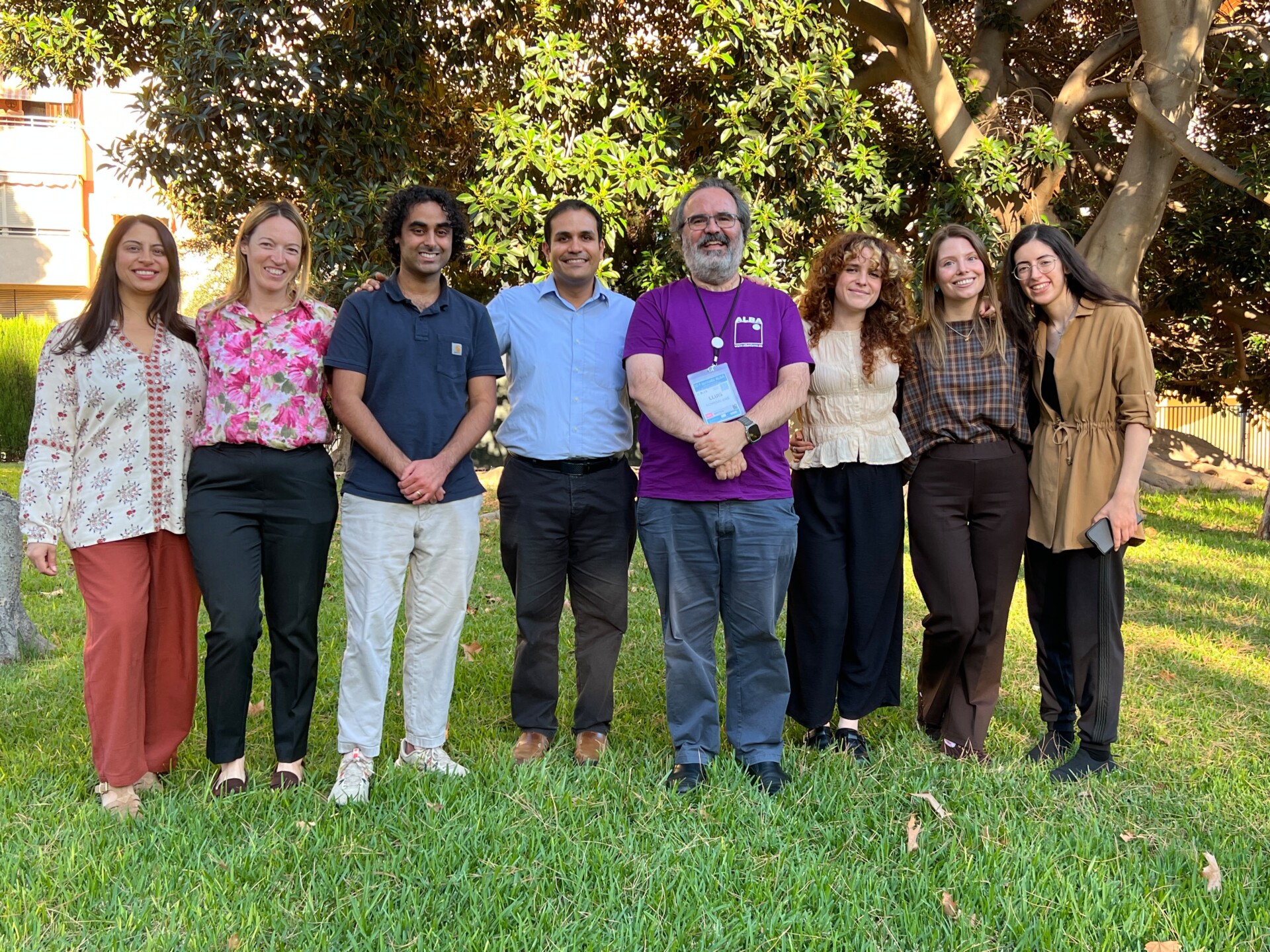
Genetic Counsellor Maria Echevarria took consent from families; Rishi Sekhri, NIHR Academic Clinical Fellow, recorded each participant’s clinical history; Orthoptist Seema Teli assessed vision and eye alignment; Ophthalmic Imaging Specialist Kayleigh Parker carried out retinal imaging; Vanessa Rodwell, NIHR Academic Clinical Fellow, recorded eye movements and pupil responses; and Ophthalmology Trainee Lilian Zevlaris measured hair and skin pigmentation.
Specialist equipment was transported to Alicante for the study, including a research-grade OCT scanner loaned by Heidelberg Engineering, which allowed researchers to produce detailed images of structures inside the eye.
Because participants had already undergone genetic testing, researchers can now compare their genetic results with the physical characteristics recorded during the event.
The aim is to better understand why albinism can affect people differently and, in the longer term, help improve the information, assessment and care provided to patients.
Importantly, the research was carried out among families and friends at a community event rather than in a traditional hospital or laboratory setting.
Researchers believe the familiar environment helped create a relaxed experience for participants while enabling the team to collect a substantial amount of high-quality research data.
Dr Thomas, Clinical Associate Professor, Honorary Consultant Ophthalmologist and Clinical Lead at the Ulverscroft Eye Unit at the University of Leicester, said: “What made this study so special was that we took the research to the community rather than asking the community to come to us.
“In just three days we were able to examine 120 people, from a 12-month-old child through to adults, collecting detailed information about their eyes, vision and pigmentation.
“By combining these measurements with participants’ genetic information, we hope to understand much more about why albinism affects people in different ways and ultimately use that knowledge to improve care.
“Many attendees had never had such a comprehensive eye assessment in one place, and some had never had an OCT scan. We examined many children and were able to test their parents and relatives too – some showed mild features of albinism they had not been aware of, and a few may well have albinism themselves without having known it.
“None of this would have been possible without Professor Montoliu and ALBA, who spent months preparing for the event with us, or without the families who gave up their time to take part.”
Pepe Solves, Vice President of ALBA, said: “The initiative was of enormous interest to ALBA members, and their participation in the tests has been extraordinary. ALBA was delighted to participate in organizing the tests. We believe it will be an unprecedented contribution to the understanding of the relationship between genetics and the ophthalmology of albinism.”
Lluis Montoliu, from CNB-CSIC added: “I am grateful to the team of Dr Mervyn Thomas for travelling all the way to Alicante to join our annual ALBA meeting where they could examine the altered vision of a numerous groups of people with albinism.
“This represents a further collaborative effort from our labs in order to advance our understanding of albinism and its visual deficits.
“Albinism is a rare genetic condition; hence it is usually difficult to get access to hundreds of people with albinism to examine their vision. This collaboration made this possible, for the benefit of our research efforts and patients.”
The Ulverscroft Eye Unit at the University of Leicester is supported by the Ulverscroft Foundation, a Leicestershire charity that has funded ophthalmology research at the University since 1979.