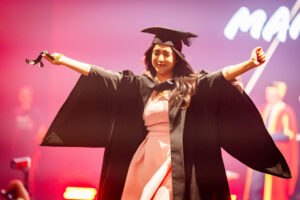
Bridging the Global Soft Skills Gap: Effat University Emerges as a Model for Workforce-Ready Graduates
As global employers raise red flags over a shortage of critical thinking, collaboration, and emotional intelligence among graduates, one Saudi university is charting a new course for higher education. Effat University, based in Jeddah, is leading a quiet revolution embedding soft skills into every course, lab, and project, from engineering to cinematic arts.
The Global Disconnect: Degrees Without Readiness
According to LinkedIn Global Talent Trends under Trends in Hiring, 69% of U.S. executives now say they plan to prioritise candidates with strong soft skills, particularly transferable ones that allow for agile, cross-functional collaboration.
“AI has the potential to lead to major shifts in how we hire and who we hire,” said Erin Scruggs, LinkedIn’s VP and Head of Global Talent. “As automation takes over routine, repeatable tasks, the value of inherently human abilities like problem-solving, adaptability, and collaboration becomes even more pronounced.”
Yet this emphasis on soft skills reveals a striking gap between graduate self-perception and employer expectations. According to the NACE’s 2024 Student Survey and Job Outlook 2025 survey, 90.5% of students believe they are proficient in teamwork, but employers rated them at just 55.9%. Similarly, 80.8% of students rate their critical thinking skills as strong, while employers report only 55.9% proficiency.
“Soft skills are no longer optional; they are foundational,” says Dr. Haifa Jamalallail, President of Effat University. “We’re not just preparing students to enter the workforce; we’re preparing them to lead it.”
Effat is tackling the issue from multiple fronts:
Curriculum Designed for the Real World
At Effat University, soft skills aren’t add-ons they’re embedded into every program. Whether studying business, engineering, or architecture, students engage in experiential learning that sharpens communication, teamwork, and leadership. In the Architecture department, for example, students collaborate directly with major institutions like the Royal Commission for the Holy Sites of Makkah. One standout initiative is the Al-Osayla Project, where students tackled culturally sensitive urban development near sacred sites.
“In the Architecture program at Effat University, students move beyond technical mastery to lead real-world projects,” says Dr. Asmaa Ibrahim, Dean of ECoAD & Director of MSAU. “They present to stakeholders, manage diverse teams, and solve culturally sensitive design challenges developing skills essential for today’s architectural leaders.”
Studios and Mentorship That Shape Workforce-Ready Graduates
Effat has also introduced hands-on Soft Skills Studios, where students refine emotional intelligence, digital storytelling, cross-cultural communication, and collaborative leadership in simulated professional settings. These labs are designed to mirror workplace pressures and fast-paced decision-making.
Beyond labs, Effat’s Mentorship-First Model ensures every student is supported by faculty and seasoned industry professionals guiding them through career planning, personal branding, and workplace dynamics. This intentional pairing of classroom knowledge with human-centric development is what sets Effat graduates apart in a competitive, rapidly evolving job market.
Why It Matters Now
As AI and automation shift job requirements, human-centric capabilities are gaining prominence. According to The World Economic Forum’s Future of Jobs Report 2023, analytical thinking, creativity, leadership, and resilience are among the top ten most in-demand skills through 2027.
This trend is reflected globally. The UK Government Government Employer Skills Survey of 1,045 companies found that 88% rated problem-solving and 85% rated collaboration and adaptability as critical for success.
Meanwhile, regional platforms like Bayt (a job portal that connects employers and job seekers in Saudi Arabia) confirm this shift locally, reporting that adaptability, problem-solving, leadership, and teamwork are now among the most sought-after skills by employers across Saudi Arabia.
“Academic achievement alone is no longer enough,” says Dr. Jamalallail. “The future belongs to those who can think critically, communicate clearly, and collaborate across borders.”